
Performer
Robotics & performing arts
- Driving question
- Can a robot put on a performance that moves people?
- Sensing
- Face detection
- Showcase
- Robot Theatre
What we offer
Everything a school needs to run humanoid robotics: the robot, the curriculum, the trainers and the software.
01 · Robot
A 95 cm humanoid with 22 joints, a depth camera and a microphone array. Light enough to carry, tough enough to compete.
Powered by 
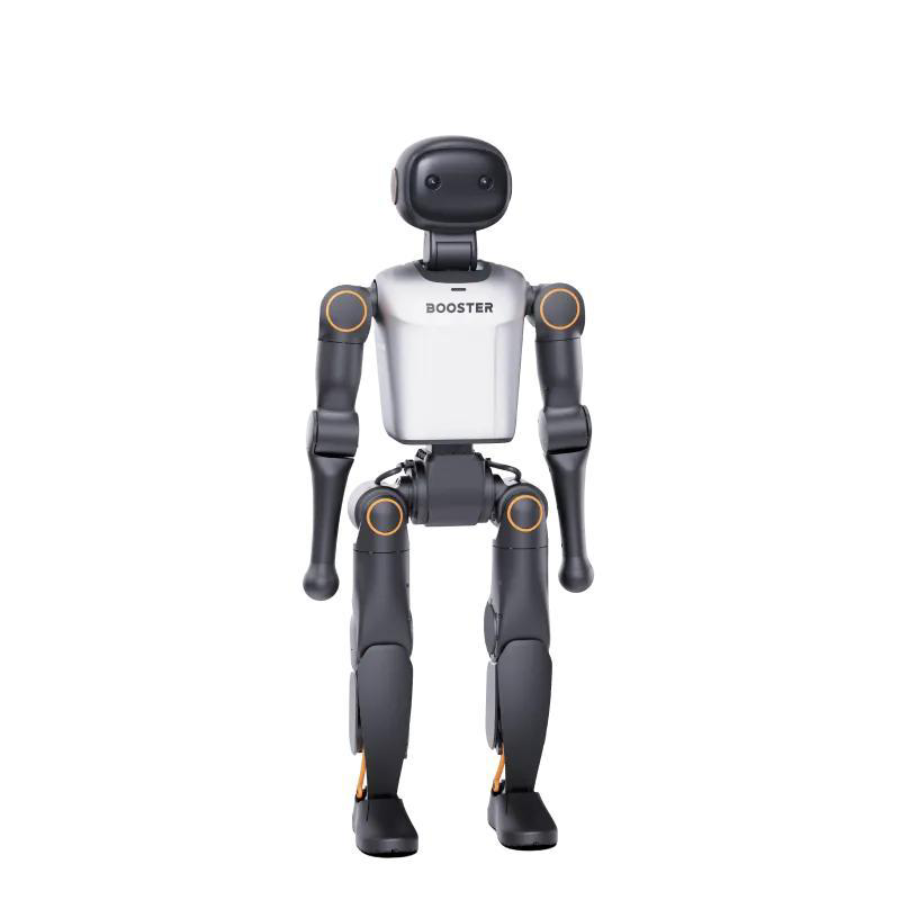
| Spec | K1 Education | K1 Professional |
|---|---|---|
| Height · weight | ~95 cm · ~19.5 kg | ~95 cm · ~19.5 kg |
| Joints (DoF) | 22 | 22 |
| AI compute | 117 TOPS | 200 TOPS |
| Sensors | Stereo depth camera, 9-axis IMU, 3-mic array | Stereo depth camera, 9-axis IMU, 3-mic array |
| Battery | 5Ah, ~80 min walking | 5Ah, ~80 min walking |
| Warranty | 1 year | 1 year |
Source: Booster Robotics.
Safety
Safety is a skill learners demonstrate before they run a single program.
| Principle | How the curriculum builds it |
|---|---|
| Safety before access | Milestone M1 "Safe" opens every pathway. Learners show the wake-up routine and the no-touch zones first. |
| Mode discipline | Learners use the robot's four operating modes and explain why it can't jump straight from rest to walking. |
| Controlled handling | The robot is carried by protocol. A safety harness rig is used for power testing and full-body dance. |
| Space and bystanders | A level, non-slip floor of at least 3 × 3 m with 1.5 m clearance, plus rules for tracks, lanes and visitors. |
| Power | At least two battery packs per robot, managed with battery and bench discipline. |
| Supervision | Every robot session runs with a trainer at the station. Typically 1 trainer for 15 students with 2 robots; the exact ratio depends on the school. |
02 · Curriculum
40 lessons, 4 PACE pathways, ages 9–15. The 10-lesson arc sits at the centre, three rings take it deeper (Copy, Calculate, Construct), and the EMBODY Method wraps every lesson.
PACE pathways
Each pathway brings a school subject to the robot and ends in a public showcase.
Robotics & performing arts
Robotics & sports
Robotics & service
Robotics & engineering
03 · Training
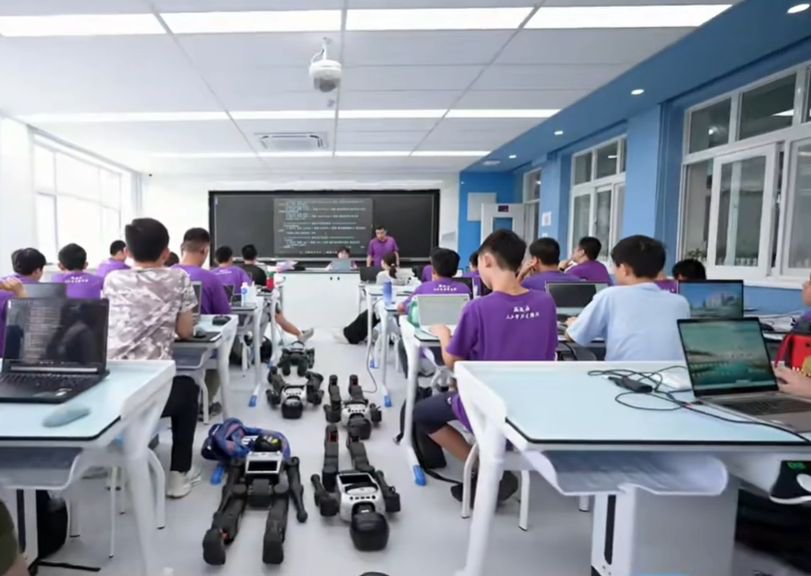
Every lesson rotates through three stations: a self-paced video, pair work, then robot time with a trainer.
For teachers and institution staff who will run the programme themselves.
04 · Software platform
A browser mini-game where students try their logic before it reaches the K1.
How schools run it
Weekly sessions across a term or a year.
A standing robotics space in your school.
Intensive days in the school holidays.
One hands-on session to start.